by Toni Vercillo
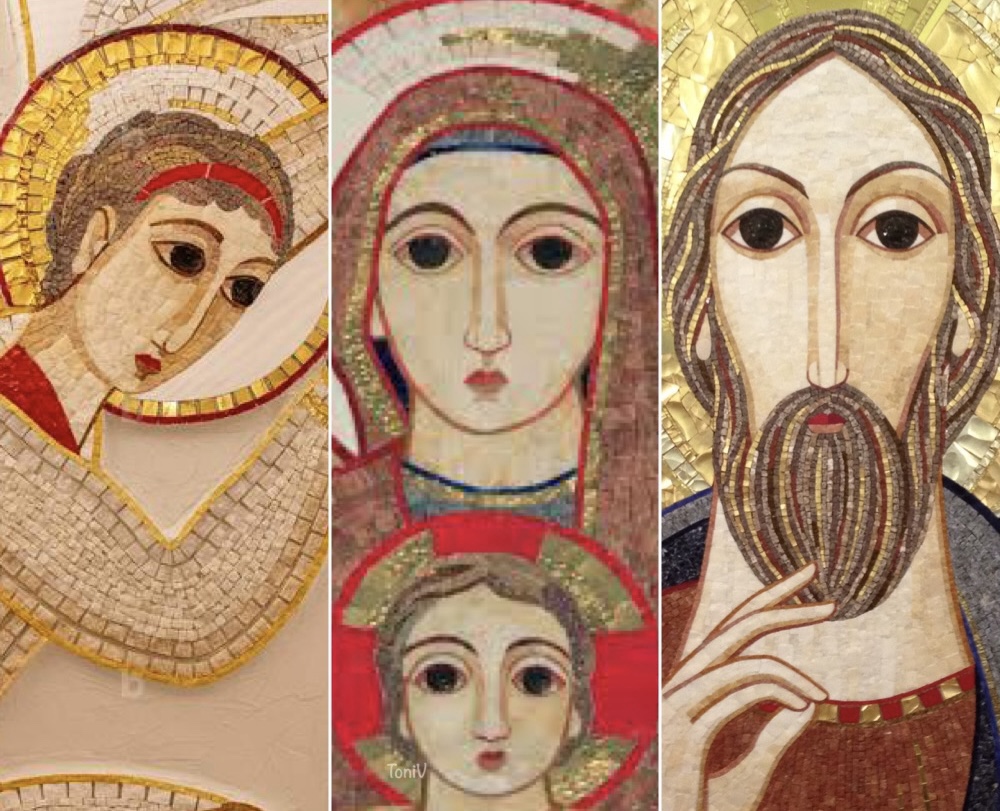
It’s the black smears on all of his works that make Rupnik’s mosaics beyond ugly. They’re soulless forms; devoid of any beauty that has always been a first requirement for Church appointments.
The only way you can call his work ‘art’ is by putting the word ‘dead’ in front of it. Rupnik’s work is dead art.
There is a call to have Rupnik’s mosaics removed from churches and other sacred places since the discovery of his ‘sexual misconduct’, but I say they ought never to have been installed in the first place.
What were they thinking? Who told Rupnik his stuff was good? Did no one see the black patches for eyes and think, “something is off here”? Was everyone so impressed by his degrees and credentials (Jesuit, philosopher, theologian, graduate of the Fine Arts Academy in Rome) that no one felt qualified to challenge his status as an ‘artist’?
Rupnik’s bio mentions the ‘distinctive feature’ of his work is their floor to ceiling, wall to wall, size but nothing is said of the stark, out of form and color, black patches which dominate his work.
The elements and principles of art when applied to any work allows the piece to communicate a message from the artist. Compared to the eyes of famous paintings of the past, what message is Rupnik attempting to convey with his empty black holes?
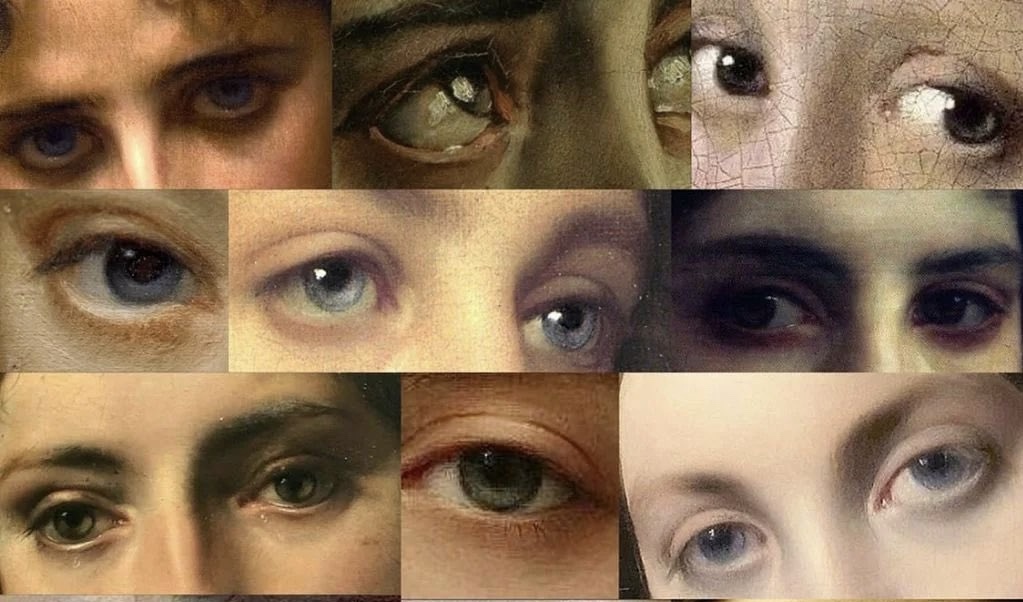
Perhaps Rupnik was communicating all along the state of his soul. Perhaps his sexual misconduct is the only reason his ugly mosaics need to be removed from our sacred spaces and his lifeless black eyes are simply a visible symptom of what lies beneath them.

 Catholic Power House